
How To Spot A Troll Or Bot
A field guide for modern internet survival

Above is the Fremont Troll located in Seattle, Washington and it is quite easy to spot. Trolls online are not always as easy to identify and they sure do waste a lot of our time and fuel a lot of misinformation. My New Year’s resolution was to ignore the trolls (you can see my video here) and I made it 26 days before I lost my cool due to a troll.
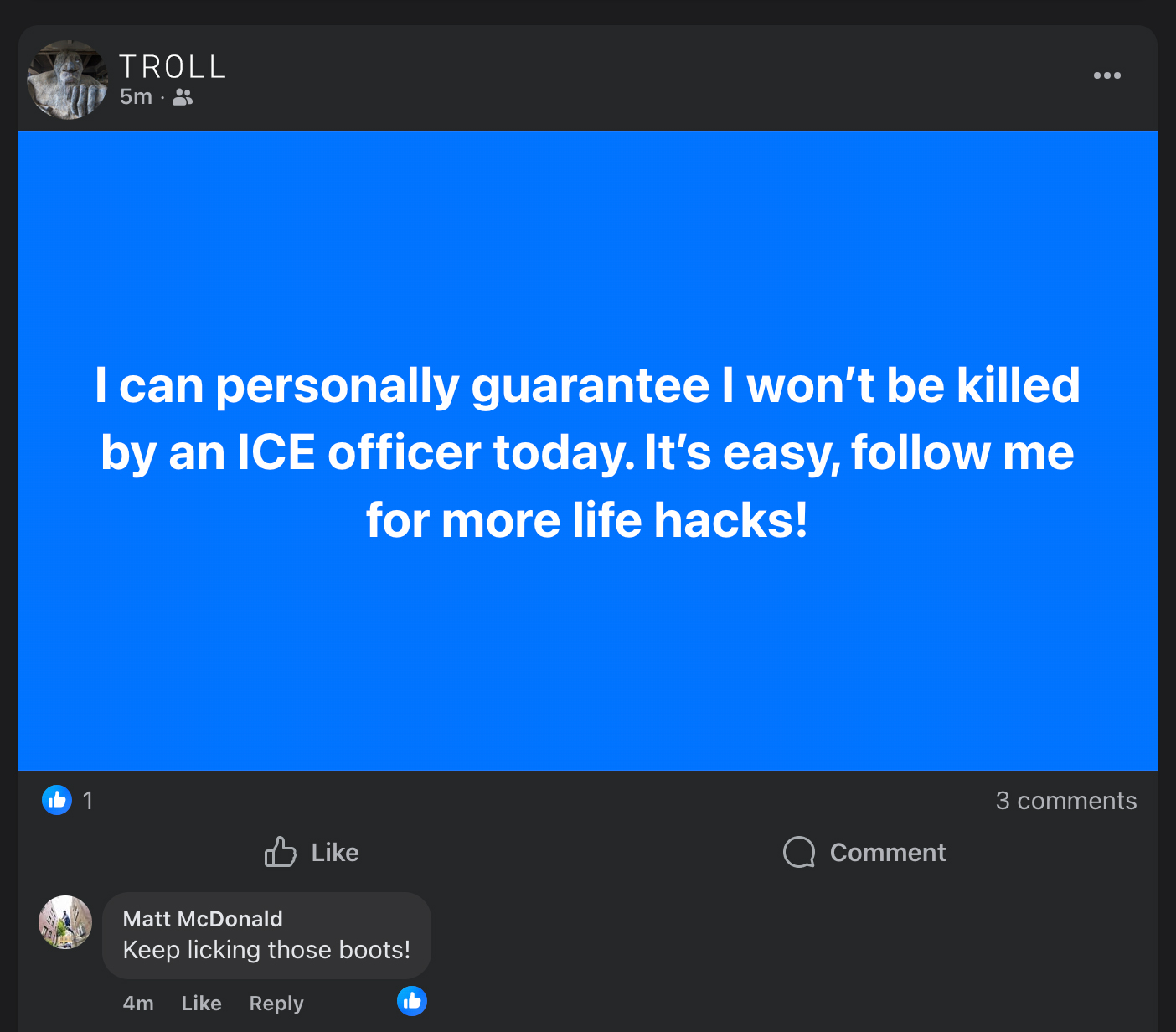
Real Human Trolls
After the murder of Alex Pretti in Minnesota by ICE, I was shocked to see so many folks still defending the actions of ICE and reposting so much misinformation. With one real life troll, who I have now blocked, I lost my cool and wrote “keep licking those boots” on a post by a real life troll. These folks want to get a reaction out of us and that is it.
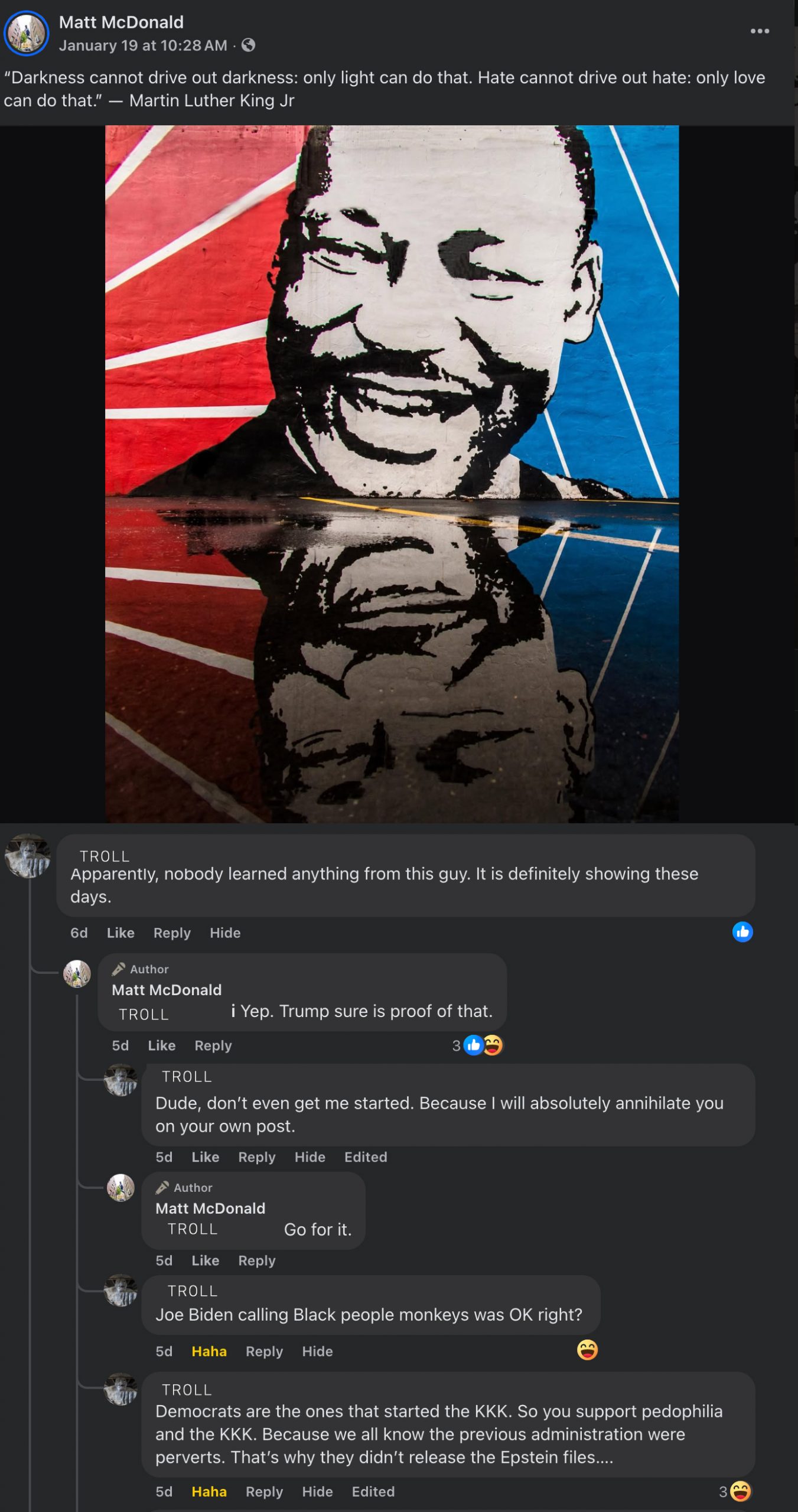
Another sample is a person I know from high school who has been putting a laughing emoji on nearly all my posts for years and decided to speak up on a MLK Day post that was very neutral.
This person said he would annihilate me on my own post about MLK Day. He then went on to tell me how Biden called Black people monkeys and how Democrats started the KKK and do not support what MLK believed. I responded with factual information about what Biden had said (he never called Black people monkeys) and then told the dude from high school to look into the Dixiecrats and the party changes of the Civil Rights movements. He never came back and I wasted my time writing responses based upon facts. These gentlemen are real life trolls who do if under their real names. We gotta at least give them credit for the courage to do it behind their real names because a bulk of the internet is folks behind fake accounts and bots.
Real People VS Private Accounts and Bots
Automated traffic has officially surpassed human activity online. Recent data from the 2025 Imperva Bad Bot Report and 2026 industry projections show a stark shift:
- Total Bot Traffic: Approximately 51% of all web traffic is generated by bots.
- “Bad” Bots: About 37% of the total internet is made up of malicious bots. These are used for ad fraud, scraping your data, or launching cyberattacks.
- “Good” Bots: The remaining 14% are helpful automation, such as search engine crawlers (like Google) or customer service helpers.
The recent surge is largely due to Generative AI. It has become significantly easier and cheaper for “bad actors” to create bots that can mimic human writing and bypass traditional security filters.
Defining a “troll” is harder than a bot because it involves human intent. However, behavioral studies and cyberbullying reports provide a clear picture of how many people are acting out:
- Active Trollers: In large-scale surveys, about 15% to 16% of internet users admit to “offending” or engaging in bullying behavior online.
- The “Millennial” Stat: Interestingly, some studies found that up to 44% of U.S. adults admit to “intentionally offensive” behavior online at some point, though they may not identify as full-time trolls.
- The Victim Perspective: The impact is much wider. Over 58% of users report being the target of online harassment at some point in their lives, a number that has risen steadily as social platforms become more polarized.
Let’s dive in deeper and see if we can help you navigate this wild online landscape.
Bot Red Flags (Automated or Semi-Automated Accounts)
This account feels odd and something is not right.
-
Very new account or years old with long gaps, then sudden non-stop posting
-
Few personal photos, or only stock-looking images
-
Bio packed with flags, slogans, or generic phrases, zero personal detail
- Minimal friends or followers
Bots don’t have hobbies. They have agendas.
Posting at inhuman rhythms
-
Replies within seconds, 24/7, no sleep cycle
-
Posts the same message across many threads or platforms
-
Identical wording copied and pasted everywhere
Humans pause. Bots spray.
Repeats talking points, ignores context
-
Responds with preloaded phrases regardless of what you said
-
Can’t answer follow-up questions directly
-
Slides back to the same claim over and over
Conversation is not their goal. Distribution is.
Engagement without comprehension
-
Replies don’t quite match your comment
-
Responds emotionally to neutral statements
-
Misuses slang or sounds oddly formal in casual spaces
It’s replying to keywords, not ideas.
Troll Red Flags (Human, but Not There in Good Faith)
Provocation over participation
-
Starts with insults, sarcasm, or “just asking questions” bait
-
Shifts goalposts constantly
-
Never acknowledges valid points and never responds on those topics
Trolls don’t debate. They poke and retreat.
Emotional farming
-
Tries to make you angry, defensive, or exhausted
-
Uses exaggerated claims to force a reaction
-
Celebrates chaos more than conclusions
If it feels like they’re feeding on your frustration, they are.
Refuses shared reality
-
Dismisses credible sources outright
-
Claims all media is fake except their favorite screenshot
-
Leans on conspiracy framing when challenged
Reality becomes optional when attention is the prize.
Identity performance
-
Constantly signals allegiance (“real patriots,” “true fans,” “wake up”)
-
Reduces complex issues to team loyalty
-
Frames disagreement as moral failure
This isn’t persuasion. It’s tribe enforcement.
Quick Tests (Use Sparingly)
The Clarifying Question Test
Ask a calm, specific follow-up.
-
Bots deflect or repeat
-
Trolls escalate or mock
-
Good-faith humans usually answer
The Time Test
Stop responding.
-
Trolls move on quickly
-
Bots keep posting anyway
-
Humans might circle back thoughtfully
Silence is a powerful diagnostic.
What Not to Do
-
Don’t “win” arguments with trolls
-
Don’t assume every bad comment is a bot
-
Don’t amplify by quote-tweeting rage
Attention is the currency. Starve the system.
Best Responses
-
Mute when it’s noise
-
Block when it’s targeted
-
Report when it violates rules
-
Engage only when there’s clear good faith
You’re not obligated to educate someone who isn’t listening.
Non-verbal communication is an awful way to talk to people and you do not need to continue these conversations because most likely they will lead nowhere. When we waste our time here we lose our precious time, lose energy, and the only entities that truly benefit are the social media platforms and the agenda that the troll is trying to push.
Written by Matt McDonald founder of SaveJournalism.com